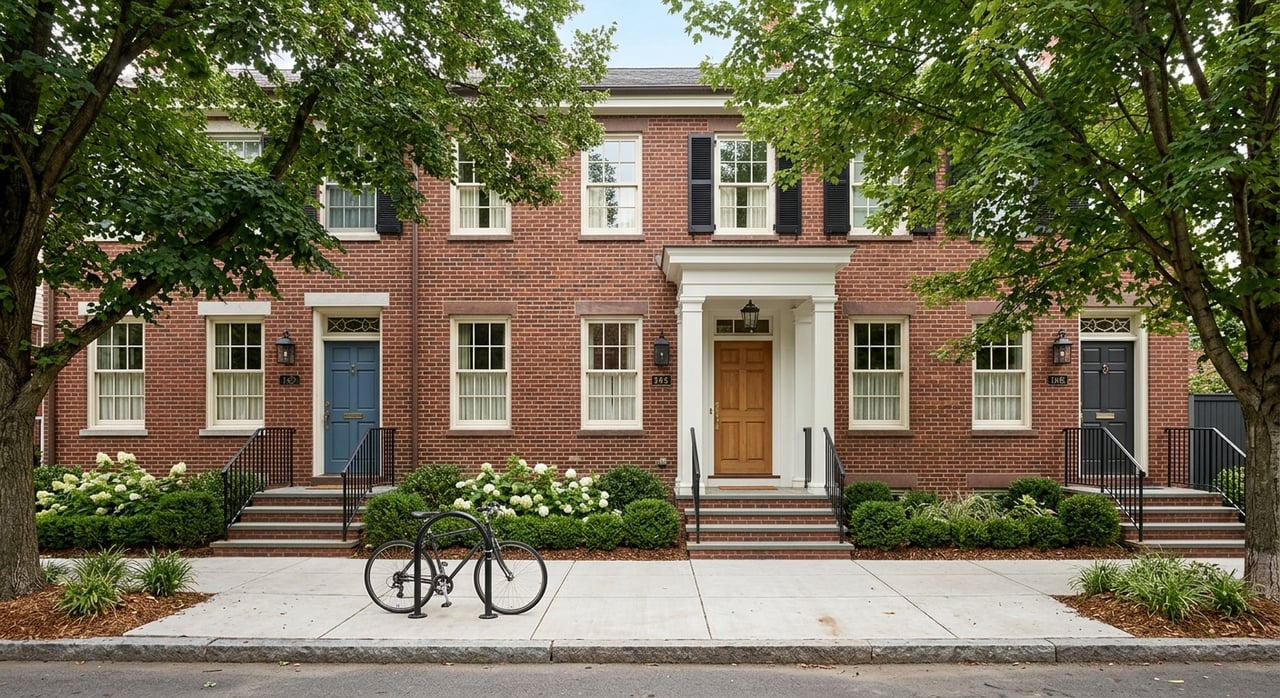
Arlington Orange Line Living: Find the Right Station
July 2, 2026
July 2, 2026
Wondering if you can really live with less car dependence in Arlington without giving up convenience? Along the Orange Line corridor, the answer is often yes, but it usually looks more like car-light living than fully car-free living. If you are weighing a move to Rosslyn, Court House, Clarendon, Virginia Square, Ballston, or East Falls Church, this guide will help you understand how daily life, housing choices, and station-area feel can shape your decision. Let’s dive in.
Arlington’s Orange Line corridor feels different from many suburban markets because the county planned it that way. The Rosslyn-Ballston framework concentrates the highest density within about a quarter-mile of Metro stations, then tapers down toward nearby lower-density residential areas.
That planning approach created a chain of mixed-use, walkable, bicycle-friendly Metro villages rather than isolated station stops. Across the broader Rosslyn-Ballston system, Arlington reports more than 47,000 residential units, 36 million square feet of office space, and 6 million square feet of retail space.
For you as a buyer, that matters because proximity is what makes car-light living possible. When homes, transit, shops, restaurants, offices, and public spaces are grouped closely together, everyday trips get easier to handle without always reaching for your keys.
It is important to set the right expectation. In Arlington, a car-light lifestyle is realistic in many Orange Line station areas, but a completely car-free lifestyle is not the norm for most households.
Arlington’s 2025 transportation snapshot shows that 41% of commuters drive alone, 27% work from home, 19% use public transit, 5% walk, and 3% use other modes. The same snapshot says 14% of households have no vehicle available, while 48% have one vehicle available.
That tells you something useful. Many residents have found ways to reduce driving, but most have not eliminated cars entirely.
The county’s travel research supports that point. Households in Metro corridors were much more likely to be car-less than households outside Metro corridors, and satisfaction with transportation was highest in the Rosslyn-Ballston area. Even so, drive-alone trips still account for 51% of shop-and-errand trips.
So the real question is not, “Will I never need a car?” It is, “Will this location cut down my driving enough to make work, errands, and weekends easier?”
A big reason Orange Line living works is that so much of daily life happens close to home. Arlington’s travel data shows that 71% of trips by residents end in Arlington, and 53% stay entirely within the county.
That means your routines may become smaller and simpler. You might take Metro to work a few days a week, walk to a grocery run, bike to meet friends, or use a car only for larger shopping trips and regional travel.
Arlington also has real infrastructure behind this lifestyle. The county snapshot lists 11 Metrorail stations, 16 ART bus routes, 52 miles of multi-use trails, 124 miles of bicycle facilities, and 110 Capital Bikeshare stations.
The county’s long-term commitment to walking and biking shows up in its recognition as a Walk Friendly Platinum community and a Bicycle Friendly Community. For you, that translates into sidewalks, trails, bike options, and a street network designed to support more than just driving.
Not every Orange Line station area feels the same. If you are trying to match your lifestyle to the right location, it helps to think in terms of daily rhythm, housing type, and how much you want to do on foot.
Rosslyn is Arlington’s gateway to Washington, D.C., and it has the corridor’s most urban feel. You will find towering office buildings, high-rise apartments and condos, and a dense mix of residential and employment uses.
If your priority is immediate Metro access and a skyline-driven setting, Rosslyn stands out. It is a strong fit if you want convenience first and are comfortable with a more vertical, fast-paced environment.
Court House blends residential living with government, office, retail, theaters, and larger residential communities. It often feels like a civic center with a very practical walk-to-everything pattern near the station core.
For buyers who want a central location without the intensity of Rosslyn, Court House can feel balanced. You get everyday convenience, mixed uses, and a station area shaped around both activity and nearby residential preservation.
Clarendon is one of the corridor’s clearest examples of the neighborhood-urban-village model. The 212-acre station area includes single-family homes, apartments, condos, office buildings, and a mix of local and national stores.
County planning in Clarendon emphasizes walkable streets, safe crossings, attractive public spaces, and a mix of old and new buildings. If you want an area where errands on foot feel natural, Clarendon is one of the strongest candidates.
Virginia Square is more residential in character than Clarendon or Ballston. It is a 190-acre area that remains predominantly residential while also serving as a center for cultural, educational, and recreational activity.
The sector plan calls for better pedestrian access, increased transit use, neighborhood-serving retail, and mixed-use districts. For you, that can mean a quieter feel while still staying connected to the Orange Line corridor.
Ballston often feels like the corridor’s most complete downtown. It is the western end of the Rosslyn-Ballston corridor and functions as a major transportation hub with office and residential buildings, hotels, shops, restaurants, and open spaces.
Housing around the station includes apartments, townhomes, duplexes, and flats. If you want a station area with a broad mix of housing and a strong concentration of daily conveniences, Ballston deserves a close look.
East Falls Church is the most suburban-leaning Orange Line option within Arlington. The area includes single-family homes, townhouses, parks, and some commercial and industrial uses, with the W&OD and Custis trails running through the neighborhood.
Compared with the inner corridor stations, East Falls Church offers a more residential setting and housing stock that includes many single-family homes built from the 1930s through the 1950s. If you want Orange Line access but a less urban daily feel, this is the clearest match.
If your goal is to handle the most errands on foot, some station areas stand out more than others. Based on Arlington’s descriptions of land use and development patterns, the most mixed-use and retail-rich parts of the corridor are:
These locations tend to offer the strongest combination of housing, shops, offices, dining, and public spaces close to Metro. In practical terms, that often means you can stack multiple stops into one outing without driving.
If you prefer a more residential setting, Virginia Square and East Falls Church may still support a car-light lifestyle, but you may find yourself using a car a bit more often for certain errands.
Arlington’s overall housing stock helps explain why the Orange Line corridor feels so transit-oriented. According to the county’s 2024 profile, 72.0% of housing units are multi-family, 22.3% are single-family detached, and 5.7% are single-family attached.
The county’s 2026 profile adds that 99% of Arlington’s net housing growth since 2020 has come from multi-family apartments and condos. In other words, if you are searching along the Orange Line, you should expect condos and apartments to make up much of the available housing, especially near the closest-in station cores.
That pattern also lines up with household size. In the Rosslyn-Ballston corridor, one-person households make up 50% of households, which helps explain why smaller homes in highly connected locations are such a visible part of the market.
When buyers start browsing the Orange Line corridor, they often focus first on station name. A better first filter is usually housing type.
Countywide December 2025 pricing from NVAR puts condos at about $476,832, townhomes at about $855,000, and single-family homes at about $1,337,434. Those are broad countywide anchors, but they give you a practical starting point.
Here is the key takeaway: closer-in station areas usually skew toward condo and apartment living, while townhomes and detached homes become more common as you move outward or away from the most intense station cores. That makes product type one of the fastest ways to align your wish list with your budget.
Car-light living along Arlington’s Orange Line corridor can work especially well if you value convenience, hybrid commuting, and access to local destinations. It may be a strong fit if you want to reduce driving without giving up the option to keep one vehicle.
It can also work well if you are deciding between space and location. In this corridor, many buyers choose a smaller home or attached housing in exchange for easier transit access and more walkable daily routines.
At the same time, your experience will depend on the station area you choose. Rosslyn and Ballston may feel more active and urban, while Virginia Square and East Falls Church may appeal more if you want a calmer residential setting.
Before you buy, think about your week rather than just the listing photos. Ask yourself:
Those answers usually point you toward the right station faster than a broad search ever will. The corridor is connected, but each stop has its own rhythm.
If you want help narrowing your options, comparing housing types, or identifying the Orange Line location that best matches your budget and routine, River City Elite Properties can guide you with the kind of local, high-touch advice that makes your move feel clear and manageable.
Stay up to date on the latest real estate trends.
Choosing Thomas means opting for a seamless ‘white glove’ service that delivers on your real estate goals, ensuring a journey that's as rewarding as the destination, with every step tailored to exceed your expectations.