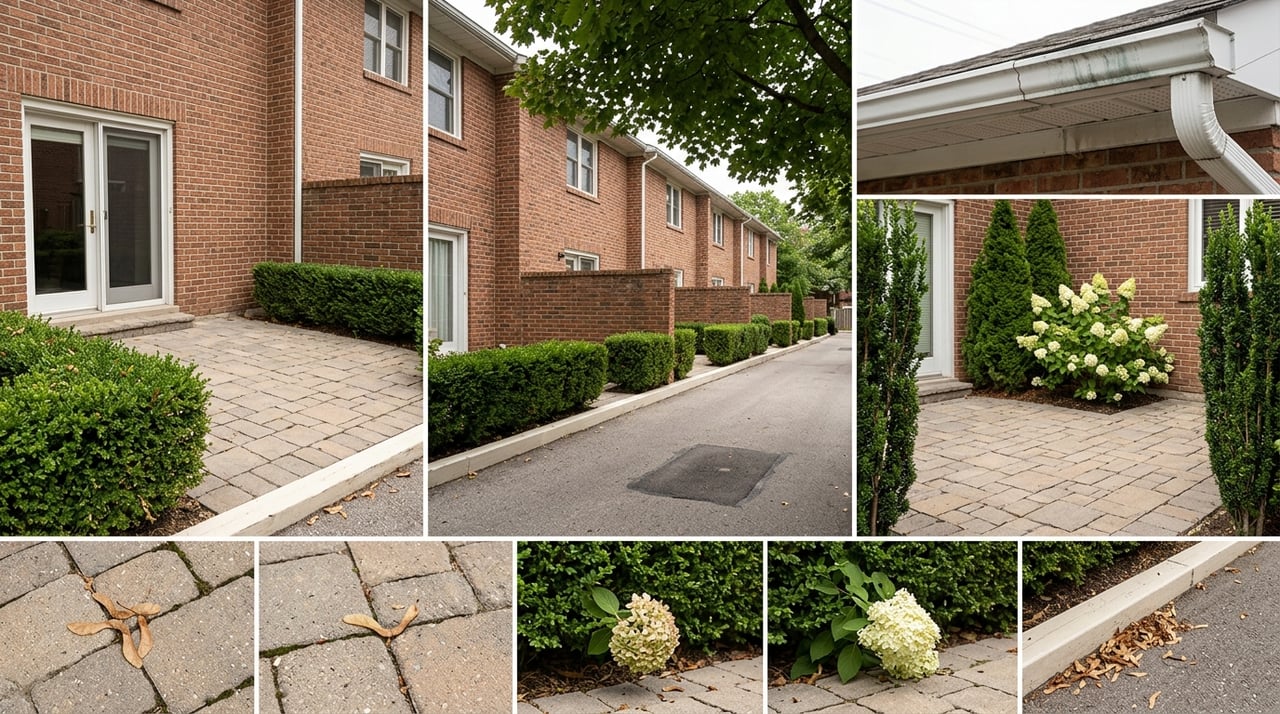
Burke Centre HOA Resale Certificate Delays Explained
August 27, 2026
August 27, 2026
Most sellers in Burke Centre assume the thing that could blow up their closing date is the inspection, or a lowball counteroffer, or a picky appraiser. But the resale certificate also deserves a place on the closing checklist.
In Burke Centre specifically, it carries a wrinkle: the fee and financial disclosures a buyer receives don't just reflect the master Conservancy budget. They also have to reflect whichever one of Burke Centre's 65 individual clusters the home sits in.
Burke Centre Conservancy is the master homeowners association for the entire 1,700-acre planned community, which spans five distinct neighborhoods, Commons, Landings, Oaks, Ponds, and Woods, and roughly 5,862 homes. Under Virginia's Property Owners' Association Act, once a seller requests a resale certificate in writing, the association has 14 days to produce it. That certificate has to lay out the current assessment status, any delinquencies, pending special assessments, reserve fund position, and outstanding violations tied to the property.
The Conservancy's own published fee schedule currently lists the certificate at $211 for a paper copy (covering up to two copies) or $176 for an electronic version. That's the real, current cost of the document, straight from the association that issues it.
Burke Centre isn't organized as one flat HOA. It's a master association layered over 65 clusters, about 15 per neighborhood, and in many of those clusters, particularly the townhome and condo sections, there's a separate cluster-level or sub-association fee sitting on top of the Conservancy assessment. The resale certificate has to account for both.
The Conservancy's master assessment is one part of the association-cost picture. In many clusters, a separate cluster-level assessment also applies.
A cluster-level assessment may not appear on a public dues page; the resale certificate provides information about the applicable fee. Because each cluster manages its own budget and reserves, financial details can vary by cluster.
A resale certificate may disclose a cluster reserve deficit or a planned special assessment for roofing, siding, or parking lot repaving.
Burke Centre's housing stock was largely built between 1977 and 1985. Roofs, siding, and parking surfaces in that vintage are reaching the age where clusters start voting on capital repairs, and those repairs often get funded through a special assessment layered onto whatever the buyer already expected to pay. A buyer who budgeted around the advertised master assessment and only learns about a looming siding assessment once the certificate arrives is not in a great negotiating position, especially if they've already waived their financing or inspection contingencies to win the home.
This is also part of why price dispersion inside Burke Centre runs wide. An updated colonial with a walkout basement in a financially healthy cluster can close well above a similar-sized home two streets over sitting in a cluster with deferred reserves. The square footage looks the same on paper. The paperwork behind it does not.
Here's where the paperwork clock becomes a real scheduling problem, not just a curiosity.
Once the resale certificate is delivered to the buyer, even a partial version, Virginia law starts a three-day right of rescission. The buyer can cancel the contract without penalty inside that window. So the full sequence looks like this:
| Step | Typical time required |
|---|---|
| Seller requests resale certificate | Day 0 |
| Conservancy and, if applicable, cluster association produce certificate | Up to 14 days |
| Certificate delivered to buyer | Starts rescission clock |
| Buyer's right to cancel without penalty | 3 calendar days |
| Total time from request to a clear-to-close position | Up to 17 days |
Under current conditions, well-prepared Burke Centre listings are still moving fast, some going under contract within the first weekend, with settlement often scheduled 30 to 45 days out. If a seller waits until after ratification to request the certificate, that 17-day paperwork sequence can eat more than a third of the entire time between contract and closing, on top of everything else that has to happen: financing, appraisal, final walkthrough, title work.
Sellers who order the certificate the day they sign the listing agreement, rather than the day they go under contract, essentially get that two-and-a-half-week window for free. It runs in parallel with marketing and showings instead of competing with the closing timeline.
You're reading this during Burke's second strong listing period of the year. Local seasonal patterns run stronger from late February through early June, and again from mid-August through mid-October, with July and late December measurably slower. If you're planning to list a Burke Centre home before the holidays, the certificate request belongs on your to-do list before the sign goes in the yard, not after you accept an offer.
A few things worth confirming before you list:
If you want a sense of how your specific cluster and section compare to what's currently active on the market, our Burke Centre neighborhood page tracks local inventory, and a free home valuation can help you understand where your home sits before you request any paperwork at all. If you're weighing whether a single-family home or a townhome section makes more sense for your next move, our breakdown of single-family versus townhome living in Burke covers how the fee structures typically differ between the two.
Does every home in Burke Centre pay a cluster fee on top of the Conservancy assessment? No. Many single-family sections operate under the master assessment alone. The additional cluster or sub-association fee is more common in townhome and condo sections, where shared exterior maintenance and smaller common areas require their own budget. The resale certificate is the document that confirms which structure applies to a specific address.
What happens if the certificate reveals a special assessment after we're already under contract? The buyer's three-day rescission period begins once the certificate is delivered, even if it only arrives after ratification. That gives the buyer a real, if short, window to walk away without penalty if the disclosure changes their calculation. For sellers, this is exactly why ordering the certificate early, before an offer exists, removes the chance of a late surprise derailing a deal that's already this far along.
Can the 14-day production window be shortened? Not by statute. The 14 days is the maximum window Virginia law allows the association to take, not a guaranteed turnaround time. Some requests come back faster, particularly for straightforward single-family accounts, but a seller shouldn't count on it. Building the request into your pre-listing checklist is the only reliable way to keep it from competing with your closing date.
Selling in Burke Centre rewards preparation more than it rewards luck, and the resale certificate is one of the few pieces of that preparation that's entirely within a seller's control from day one. If you're thinking about listing this fall and want a clear read on your cluster, your comps, and your timeline before you request a single document, Thomas Cauley is a call away, or start with a free home valuation to see where your home stands today.
This article is general information, not legal, tax or financial advice. Consult a qualified professional about your situation.
Stay up to date on the latest real estate trends.


Choosing Thomas means opting for a seamless ‘white glove’ service that delivers on your real estate goals, ensuring a journey that's as rewarding as the destination, with every step tailored to exceed your expectations.