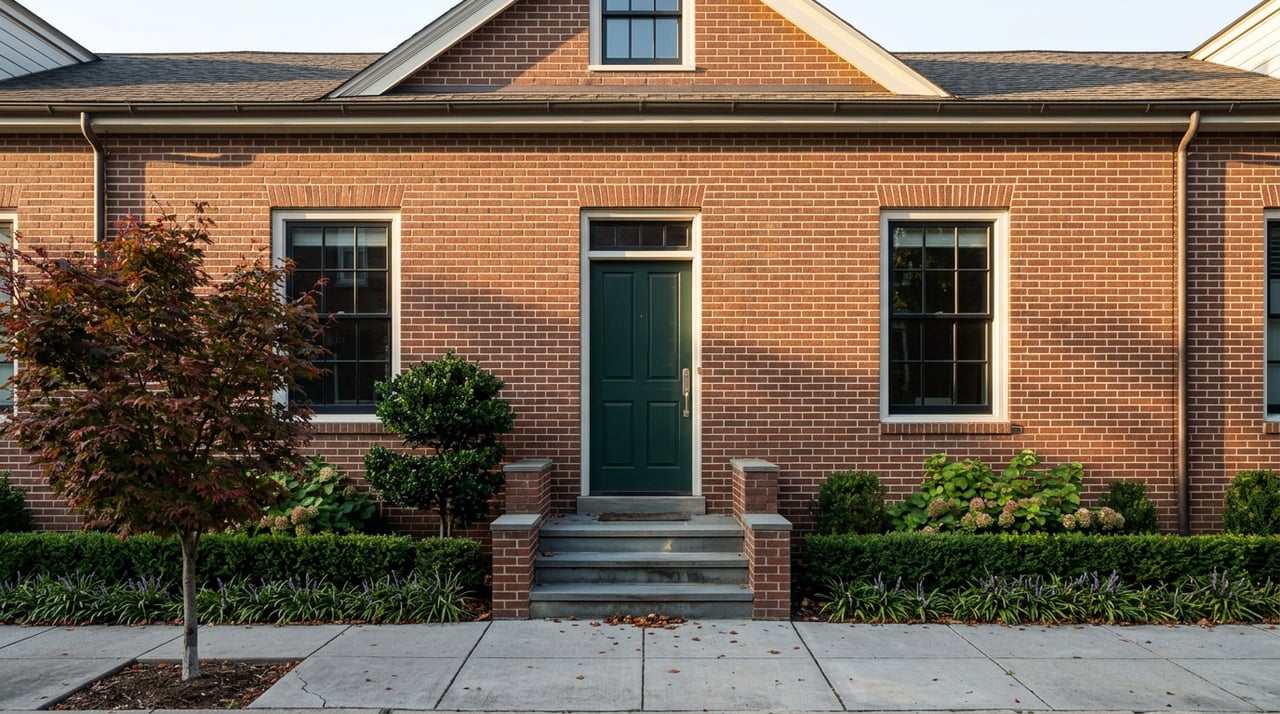
What’s New in Potomac Yard, Alexandria This Fall
September 10, 2026
September 10, 2026
Fifteen years ago, if you told someone in Alexandria you were headed to Potomac Yard, they knew exactly what you meant: you were driving to the Target, maybe swinging by the movie theater, then getting back in your car. Nobody walked there for lunch because there was nowhere to walk to and no one working nearby to walk there.
This fall is the first one where that sentence stops making sense. Somewhere between March 2025 and January 2026, three separate things that had been under construction for years all switched on inside the same twelve months, and the neighborhood built around a freight yard finally has enough people showing up on foot, on a Tuesday, at lunchtime, to support restaurants that don't need a parking lot to survive.
The Potomac Yard Metrorail Station opened on May 19, 2023, becoming just the second infill station added to the Metro system since NoMa-Gallaudet U in 2004. The engineering firm Arup, which designed the station, projected it would shift roughly 6,700 daily vehicle trips onto transit along the Route 1 corridor once the surrounding development filled in.
For its first two years, that projection was mostly theoretical. The station's north and south pavilions connect by a pedestrian bridge over the old freight rail corridor, and that bridge ties directly into the Mount Vernon Trail, the same paved route that runs another 20 miles through Alexandria toward Old Town and Del Ray. But a bridge to a construction site isn't a bridge people use twice a day. The land on the other side of it was still mostly dirt and rebar.
If you ride through the station now, you'll pass two public art installations by artist Rob Ley that have been there since opening day and that most riders probably walked past without registering until there was a reason to look up. "A Subtle Trip" wraps the mezzanine of the south pavilion in painted aluminum shaped like Virginia bluebells. "Fieldwalking," on the north pavilion's elevator tower, uses the same material in a cherry blossom pattern. They were funded through the city's Art in Transit program back in 2023, waiting for foot traffic to catch up to them.
The clearest signal that something changed isn't the Metro ridership, which the transit authority doesn't break out neighborhood by neighborhood. It's where two very different restaurant groups chose to plant themselves.
Founding Farmers opened its Alexandria location on March 12, 2025, in the Oakville Triangle, a five-minute walk from the Potomac Yard Metro. It's a full-service restaurant open 365 days a year with an in-house bakery, and it's the kind of concept that needs sustained weekday traffic to justify seven-day operations, not just weekend shoppers passing through on their way to a big-box store.
Ten months later, Wonder held its grand opening at 3615 Richmond Highway on January 9, 2026. It's the company's tenth outpost in the Washington-Baltimore area and the first in Alexandria to use its multi-restaurant ordering format, letting one order pull dishes from more than two dozen participating concepts. Wonder donated a dollar from every meal sold that first week to the Capital Area Food Bank, a detail that matters less for the neighborhood's identity than the fact that a fast-fine concept built around convenience has joined the local dining mix.
Here's the pattern worth noticing: neither restaurant located inside the old Potomac Yard Shopping Center itself, the strip that anchored the neighborhood for two decades. Both chose the newer, walkable blocks built around the Metro and the Virginia Tech campus. That's a different bet than "drive here for the Target." It's a bet that people would already be nearby on foot.
| Anchor | Opened | Distance from Metro |
|---|---|---|
| Potomac Yard Metro Station | May 19, 2023 | — |
| Founding Farmers | March 12, 2025 | 5-minute walk |
| Virginia Tech Academic Building One | Early 2025 | 3 blocks |
| Wonder Food Hall | January 9, 2026 | Along Richmond Highway |
The missing ingredient for years wasn't restaurants willing to open. It was people with somewhere to be on a Tuesday afternoon. That arrived with Virginia Tech's Academic Building One, an 11-story, 300,000-square-foot building that opened in early 2025 and cost roughly $310 million to build, part of a larger $1 billion campus plan tied to Amazon's HQ2 arrival in nearby Crystal City.
The building's glass facade shifts between cobalt blue and champagne gold depending on the angle of the sun, which makes it an easy landmark even if you've never set foot inside. What matters more for a lunch crowd is who's inside it. As of spring 2025, more than 500 graduate students and close to 20 faculty were working out of the building, focused on artificial intelligence, quantum computing and wireless research. That's not a weekend population. That's a five-day-a-week population that didn't exist in this neighborhood before, and it's the kind of daily demand that makes a restaurant's math work without needing a Saturday rush to carry the week.
The campus keeps expanding its footprint beyond the classroom, too. In July 2026, the National Innovation Quarter, a nonprofit district spanning Arlington and Alexandria whose founding partners include Amazon, Northrop Grumman, SAIC and Virginia Tech, announced it would use part of a state grant to build a secure innovation lab somewhere in Potomac Yard. The exact site and opening timeline are still undetermined, according to the Alexandria Economic Development Partnership, which is itself a useful reminder that this neighborhood is still mid-build. Not everything here is finished. What's changed is that enough of it is finished to matter.
Put the pieces together and this fall looks different from any previous one in the neighborhood's short history as a place with an actual name beyond "the shopping center by 395."
A few things worth knowing if you live nearby or walk the trail regularly:
If you're looking for a reason to walk the trail this month specifically, two events sit close enough to reach on foot or bike without much planning. Taste of Old Town North runs September 17 at Montgomery Park, a free, family and pet-friendly evening of food, drink and live music. Two days later, Alexandria Oktoberfest takes over John Carlyle Square with a beer garden and live music. Both are an easy bike ride from the Metro pavilion by way of the same paved trail network, which means the route that used to just get you to work now gets you to a beer garden, too.
None of this makes Potomac Yard finished. The innovation lab has no address yet. The shopping center that anchored the area for two decades is still there, still doing its own thing. But the specific claim worth sitting with is this: the gap between what Potomac Yard was built to be and what it actually functions as day to day has closed for the first time since the Metro station opened. The bridge over the rail tracks gets used now. The art installations have an audience walking past them on the way to lunch instead of on the way to nowhere. A neighborhood that spent fifteen years being a place you drove to is, this fall, a place enough people are already standing in.
If you're curious how that kind of shift shows up in the surrounding Alexandria neighborhoods, or you want to see how it compares to what's happening a few blocks south along the waterfront or up the Mount Vernon Trail in Del Ray, Thomas Cauley tracks these changes as they happen because they tend to show up in the market long before they show up in a headline. If you're weighing what your own home might be worth against a neighborhood that's still actively changing shape, request a free home valuation and we'll walk through what's actually driving value on your specific block.
Stay up to date on the latest real estate trends.
Choosing Thomas means opting for a seamless ‘white glove’ service that delivers on your real estate goals, ensuring a journey that's as rewarding as the destination, with every step tailored to exceed your expectations.